
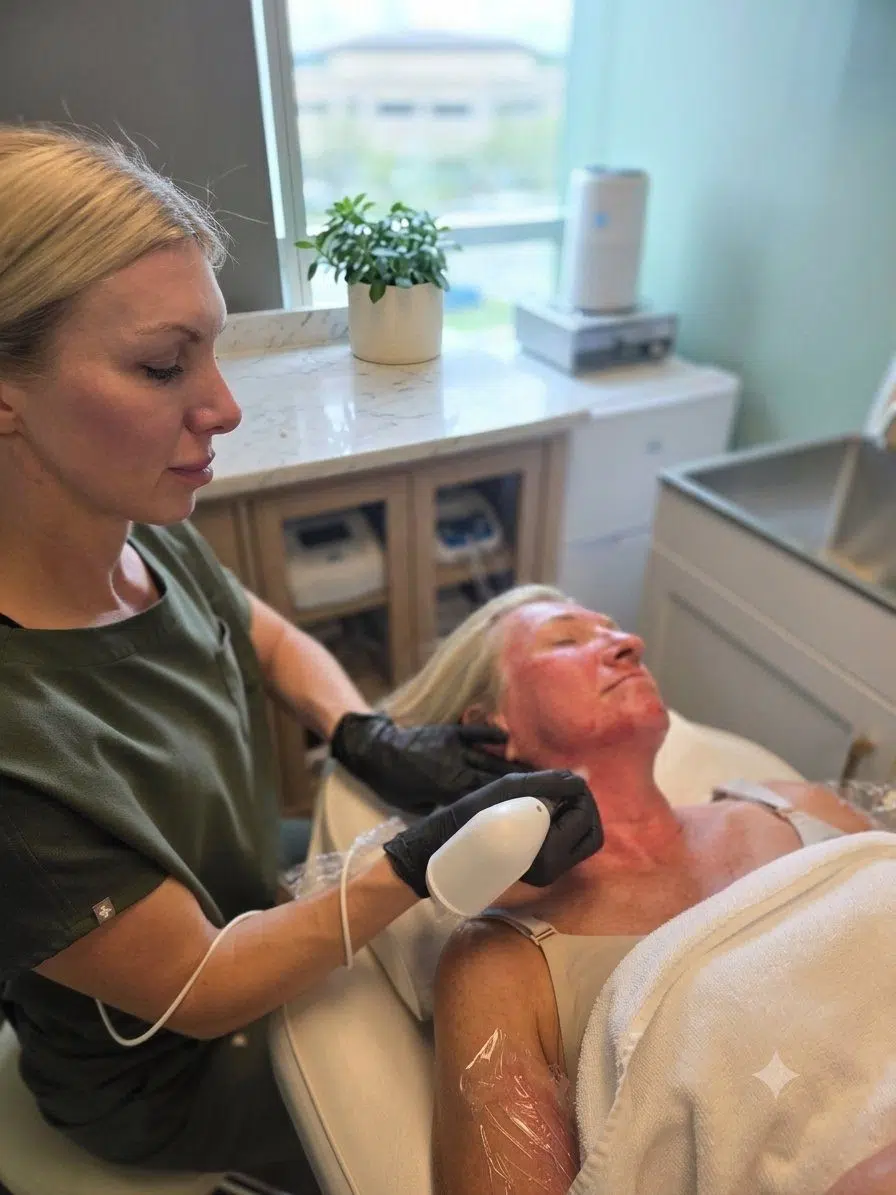
Quick answer: Microneedling is uncomfortable but not usually painful. I apply a topical numbing cream 15-20 minutes beforehand, so most clients feel light pressure or vibration rather than sharp pain. Bonier spots like the forehead can feel prickly. Expect mild redness, like a light sunburn, for a day or two after.
Quick summary: Microneedling at Elysian Laser Aesthetics in Sunpark, SE Calgary, is a minimally invasive collagen induction treatment performed on the Twist by Dermaroller. The question I hear most is does microneedling hurt — and the honest answer is that with medical-grade numbing, most clients feel only mild pressure or a light prickling, not sharp pain. This guide explains exactly what to expect, why some areas feel more than others, and how I keep treatment comfortable.
Does microneedling hurt? For most people, no — not significantly. With a medical-grade topical anesthetic applied beforehand, microneedling feels like mild pressure or light vibration. Bony areas like the forehead are more sensitive than cheeks or neck.
Does microneedling hurt? It’s the first question almost every new client asks me before their first session — usually with a slightly nervous look, picturing a roller covered in needles. I understand the worry, so let me give you the honest, experience-based answer I’d give if you were sitting in my chair at my Sunpark clinic in SE Calgary. After more than 10 years working exclusively in laser and skin treatments, I’ve performed and talked clients through this many times, and the reality is far gentler than the name suggests.
In this guide I’ll walk through what microneedling actually feels like, why it hurts less than most people expect, how I keep it comfortable, and how it compares to other skin treatments — backed by what the clinical research actually shows.
Does Microneedling Hurt? Here’s the Honest Answer
So, does microneedling hurt? For the large majority of my clients, the answer is a reassuring “not really.” With a medical-grade topical anesthetic applied and left to work for 30 to 45 minutes before I begin, the treatment feels like a light prickling, scratching, or vibrating sensation moving across the skin. Most people tell me afterward that it was far more comfortable than they’d braced for.
That said, I won’t tell you it’s completely sensation-free, because that wouldn’t be honest. You’ll feel something — usually a mild buzzing pressure. The goal of numbing isn’t to erase every sensation; it’s to take the experience from “uncomfortable” down to “easily manageable.” Comfort is also why I use the Twist by Dermaroller specifically, which I’ll explain below.
What Does Microneedling Actually Feel Like?
The honest way I describe microneedling to clients: imagine a small, fast vibrating pen gliding over numbed skin, with a faint sandpapery prickle in the more sensitive spots. The Twist runs at 150 strokes per second — the fastest motor on the market — so the needles move quickly and cleanly rather than dragging across the surface.
Here’s roughly what to expect on a comfort scale, by stage:
- During numbing (15-20 min): No needling yet — just the anesthetic doing its job. You relax.
- During treatment (15–20 min of needling): Mild prickling or vibration; more noticeable on bony areas.
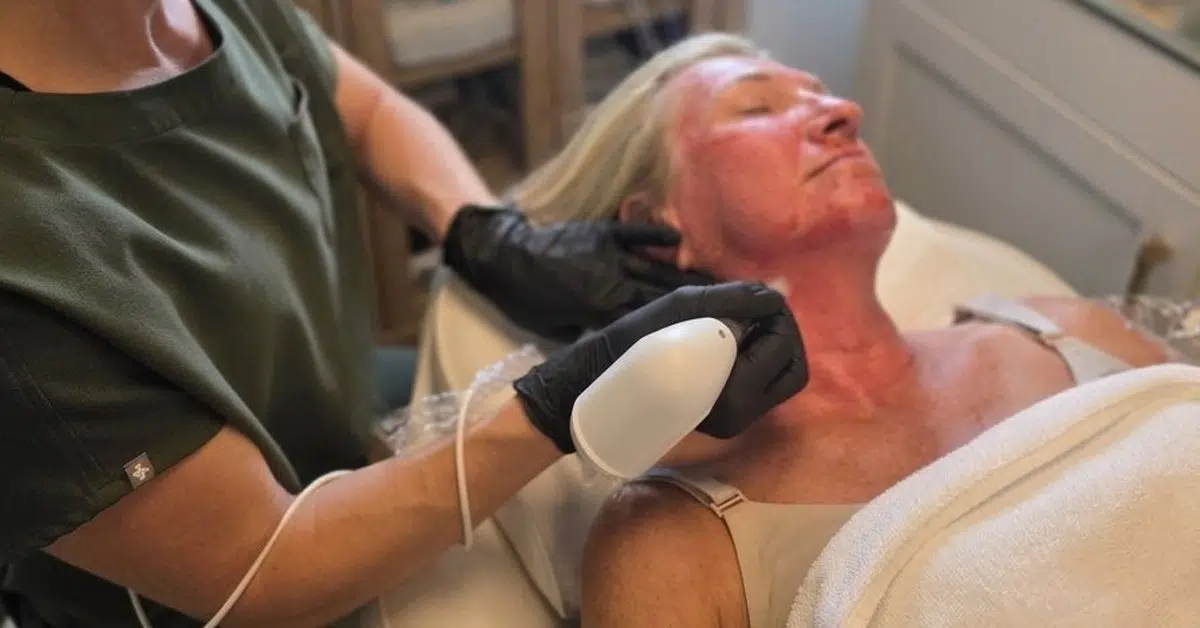
- Immediately after: Warmth and a sunburn-like flush — this looks more dramatic than it feels.
- The next day: Mild tightness, like a light sunburn, fading quickly.
The flush you may have seen in photos is completely normal and short-lived. It’s a sign your skin’s natural repair response has switched on, not a sign that anything hurt.
Does Microneedling Hurt More on Some Areas Than Others?
Yes — and this is the part most clients are surprised by. Where the treatment lands on bone with little padding beneath the skin, you’ll feel more. Where there’s more cushioning, you’ll feel less. Does microneedling hurt the same everywhere? Definitely not.
From my own treatment chair, here’s the general pattern:
| Area | Typical comfort level |
|---|---|
| Cheeks | Very comfortable — most padding |
| Chin & jaw | Comfortable |
| Neck | Comfortable |
| Forehead | More sensitive — bone close to the surface |
| Around the nose & hairline | More sensitive — thinner skin |
Because the Twist’s needle depth is adjustable from 0.25 mm to 2.5 mm, I dial it back over delicate, bony zones and go a little deeper where the skin can comfortably take it. You’re never locked into one aggressive setting across your whole face.
Why Microneedling Hurts Less Than People Expect
The word “needling” sounds far worse than the experience. Three things keep it gentle at my clinic.
1. Medical-grade numbing. A topical anesthetic sits on your skin for 30 to 45 minutes before I start. By the time I begin, the surface is well-numbed.
2. The device matters. The Twist by Dermaroller is the only microneedling device with Active Needle Retrieval (ANR) — its motor actively pulls the needles back out of the skin instead of relying on a passive spring. That means the needles spend dramatically less time in the skin, which translates directly to less discomfort and faster healing. Cheap spring-based pens drag and snag; the Twist doesn’t.
3. Technique and pacing. Going at the right speed, depth, and pressure for each zone is where 10+ years of hands-on experience earns its keep. The same device in rushed or untrained hands feels very different.
What Does the Research Say About Microneedling Pain?
This is where I like to replace nerves with facts. Microneedling is one of the more studied minimally invasive treatments, and the data on pain is genuinely reassuring.
A randomized, double-blind study published in The Clinical Journal of Pain tested microneedles against a standard hypodermic needle in human volunteers. The finding worth knowing: every microneedle tested was significantly less painful than a single standard hypodermic (blood-draw) needle, with pain scores measured at just 5% to 40% of the hypodermic needle. The researchers also found that shorter needles produced markedly less pain — which is exactly why adjustable, controlled depth matters.
On safety, a widely cited review in the Journal of Clinical and Aesthetic Dermatology confirmed that microneedling improves a wide range of skin concerns with a strong safety profile across skin types. In other words: it’s gentle and it works.
Does Microneedling Hurt More Than Laser or CO2?
If you’re weighing your options in Calgary, comfort is a fair thing to compare. Here’s how microneedling stacks up against the other resurfacing treatments I offer:
| Treatment | Sensation with numbing | Downtime |
|---|---|---|
| Microneedling (Twist) | Mild prickling / vibration | 1–3 days of redness |
| CoolPeel CO2 | Warm, prickly | 1–3 days |
| Full fractional CO2 | More intense; heat-based | Several days |
| IPL photofacial | Quick “snap” sensation | Minimal |
Microneedling sits at the gentler end. Because it’s mechanical rather than heat-based, there’s no burning sensation. If you’re torn between treatments, my honest CO2 laser vs microneedling comparison goes deeper, or you can ask an IPL photofacial question at your consultation.
Does Microneedling Hurt During Recovery?
Recovery is mild. Does microneedling hurt afterward? Generally no — most clients describe tightness and warmth rather than pain, much like a light sunburn that calms within a day or two.
For aftercare I keep it deliberately simple: gentle, lightweight products you likely already own at home, plus diligent mineral sunscreen (SPF 30+) for one to two weeks while your skin is more UV-sensitive. I don’t push heavy barrier creams or special “kits” for microneedling — your skin heals best when you keep it clean, hydrated, and protected. I’ll give you specific guidance tailored to your skin at your appointment.
How Can I Make Microneedling More Comfortable?
A little preparation goes a long way. Clients who follow a few simple steps consistently tell me their session felt easier — and it gives the numbing the best chance to work. Does microneedling hurt less when you prep well? In my experience, noticeably so.
Here’s what I recommend before your appointment:
- Arrive with clean, product-free skin — makeup and heavy moisturizers can slow how well the topical anesthetic absorbs.
- Skip retinoids and strong exfoliating acids for a few days beforehand — they can leave skin more reactive.
- Avoid blood-thinning medications like ibuprofen and aspirin in the day or two prior, unless your doctor has prescribed them — they increase redness, not pain.
- Stay hydrated and eat beforehand — going in well-rested and fed makes any sensation easier to tolerate.
- Don’t book over a fresh tan or sunburn — microneedling is safe on tanned skin, but actively burned skin needs to heal first.
- Tell me your concerns — if you’re anxious or sensitive, I’ll adjust pacing and depth and check in throughout.
During the treatment itself, slow breathing genuinely helps. The needling portion only lasts around 15 to 20 minutes, and most clients are relaxed within the first minute once they realize how manageable it is. Comfort is a shared goal — I’d always rather slow down than rush you through.
Microneedling Calgary — Frequently Asked Questions
Does microneedling hurt without numbing cream?
It’s more uncomfortable without numbing, which is why I never skip it. With a medical-grade topical anesthetic applied for 30 to 45 minutes first, does microneedling hurt? Only mildly — most clients are surprised by how manageable it is.
How long does microneedling pain last after the session?
Most clients feel only mild tightness and warmth, similar to a light sunburn, which settles within 24 to 72 hours. Sharp or lasting pain is not expected; if anything feels off, I’m always reachable.
Is microneedling safe for sensitive skin?
Yes — microneedling is gentle and suits many skin types, including Fitzpatrick types I through IV. Because it’s mechanical rather than heat-based, it carries a lower risk of pigment changes than many laser treatments. I assess your skin first to confirm it’s the right fit.
Does microneedling hurt more than getting a tattoo?
No — most clients who’ve had both say microneedling is far more comfortable. A tattoo needle works deeper and longer in one spot, while microneedling is fast, shallow, and done over numbed skin in minutes.
Can I take a painkiller before microneedling?
Most people don’t need one. I’d ask you to avoid blood-thinning medications like ibuprofen or aspirin beforehand unless your doctor has prescribed them, as they can increase redness. I’ll go over your specifics at your consultation.
Still Wondering “Does Microneedling Hurt”? Let’s Talk
If you’re still wondering does microneedling hurt enough to hold you back, the best next step is a no-pressure conversation. At my Sunpark clinic in SE Calgary I’ll look at your skin, explain exactly what your treatment would feel like, and answer every question honestly — including telling you if microneedling isn’t the right choice for your goals. You can review microneedling Calgary details, check transparent pricing, or simply book a free consultation.
Elysian Laser Aesthetics
15 Sunpark Plaza SE, Calgary, AB T2X 0M5
Text: 368-399-4013 | info@elysianlaser.ca
About the author
I’m Alaina, owner and sole laser aesthetician at Elysian Laser Aesthetics in Sunpark Plaza, SE Calgary. With over 10 years working exclusively in laser and skin treatments, I perform every treatment personally on medical-grade equipment — including the Twist by Dermaroller for microneedling and the DEKA Tetra CO2 platform. My approach is simple: honest advice, single sessions before packages, and no upselling. If a treatment isn’t right for you, I’ll say so.